Recommended
Book
Read Entirely
Read one time
Language
Italiano
Translator
Matteo Vegetti
Publishing house
Rizzoli Etas
Edition number
7
Publication year
2018
Number of pages
321
Position in the list
51
The Review
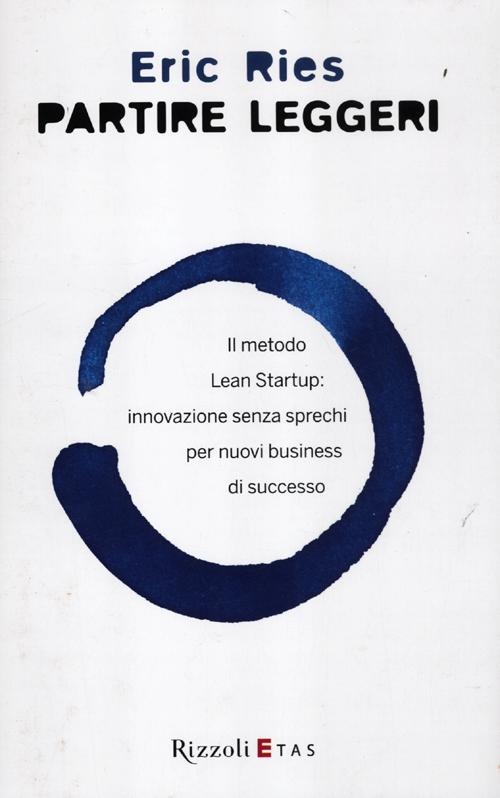
This book has many interesting and – so it seems – useful ideas.
It deserves to be read by start-uppers, entrepreneurs and managers. That said, I had the impression that its content could have been concentrated into an excellent HBR-like article and that the general tone of the writing is too enthusiastic and too much into the “I am the prophet that explains you everything you need to know to succeed” mode, which is typical of many business books.
Generally speaking, the Lean Startup method is a sort of extension to the management of innovation of the Lean Manufactory method introduced by Toyota. In fact, it shares with the Lean Manufactory model the aim of eliminating waste in product development, in product launches and in their marketing, so to avoid to end up perfectly executing wrong plans.
The book also reconsiders Taylorism, acknowledging the huge value of that revolution, but also illustrating where Taylor might have not been fully understood and followed by businessmen and managers after him, as well as where Tayorism has to be integrated with next developments in management.
My take-aways:
-> “The Audacity of Zero”: “The irony is that it is often easier to raise money or acquire other resources when you have zero revenue, zero customers, and zero traction than when you have a small amount. Zero invites imagination, but small numbers invite questions about whether large numbers will ever materialize.”;
-> Detailed planning works only in an environment with a long and stable operating experience;
-> Innovation must be executed through quick business cycles, made of the Build → Measure → Learn sequence;
-> It is central to test the assumptions of each idea through these cycles, testing them through Minimum Viable Products, developed just enough to have a meaningful result from the test;
-> Among key assumptions: “what is the value brought by this innovation/ product” and “how will the growth work”: defining them is truly important, but “analytical paralysis” must be avoided in this phase;
-> For the assumption on value, identifying the “customer archetype” is very helpful;
-> For the assumption on growth, four possible dynamics must be considered: word of mouth, a side effect of using the product, paid advertising, repeat use. Those dynamics combine into three engines of growth: the sticky engine of growth, when churn rate is lower than customers acquisition rate; the viral engine of growth; the paid engine of growth. More engines of growth can operate at the same time, but successful companies tend to focus on one of them;
-> To be able to learn from the test, it is essential to focus on the right metrics, that must be actionable; Ries introduces a nice wording for other metrics that might be very tempting for process owners, but actually useless or even misleading: vanity metrics;
-> To really understand what happens, the “5 Whys Analysis” can be extremely effective: asking why something happened 5 times in a row, therefore moving from the immediate cause to the real, fundamental and less immediate one;
-> Developers must be ready to learn which assumptions are correct (and to proceed with the plan) and which ones are not (and to change the plan accordingly, also signficantly, with a pivot);
-> Such a process - which might seem less efficient - allows to avoid executing perfectly and entirely wrong plans, testing them only when they are completed in every detail and launched at full scale (which, if the plan was based on wrong assumptions, would be clearly less, not more efficient). Such a process is associated with “small batches” in product development and deployment;
-> “If you can't fail, you can't learn”.
A few final notes.
There is a key caveat at the end, that also hedges a risk here and there looming into the book: what is described in this book is an approach: it must not become a pseudo-science, like business management sometimes does, ending up following dogmatic routines which are not actually able to grasp and create all the potential hidden value.
Also, it is really interesting to read the author's acknowledgments section at the end of the book. It makes very clear to the reader what an ecosystem of universities, foundations, companies and venture capitalists is working synergically today for the purpose of allowing innovation to be developed and unleashed. Also, the names and surnames of all the people mentioned by the author show with no possibilities to be misunderstood what a melting pot is innovation in America today, it being able to attract and catalyze talents from all the world, immigrants themselves or sons and daughters of people who converged there from any corner of the planet.
It deserves to be read by start-uppers, entrepreneurs and managers. That said, I had the impression that its content could have been concentrated into an excellent HBR-like article and that the general tone of the writing is too enthusiastic and too much into the “I am the prophet that explains you everything you need to know to succeed” mode, which is typical of many business books.
Generally speaking, the Lean Startup method is a sort of extension to the management of innovation of the Lean Manufactory method introduced by Toyota. In fact, it shares with the Lean Manufactory model the aim of eliminating waste in product development, in product launches and in their marketing, so to avoid to end up perfectly executing wrong plans.
The book also reconsiders Taylorism, acknowledging the huge value of that revolution, but also illustrating where Taylor might have not been fully understood and followed by businessmen and managers after him, as well as where Tayorism has to be integrated with next developments in management.
My take-aways:
-> “The Audacity of Zero”: “The irony is that it is often easier to raise money or acquire other resources when you have zero revenue, zero customers, and zero traction than when you have a small amount. Zero invites imagination, but small numbers invite questions about whether large numbers will ever materialize.”;
-> Detailed planning works only in an environment with a long and stable operating experience;
-> Innovation must be executed through quick business cycles, made of the Build → Measure → Learn sequence;
-> It is central to test the assumptions of each idea through these cycles, testing them through Minimum Viable Products, developed just enough to have a meaningful result from the test;
-> Among key assumptions: “what is the value brought by this innovation/ product” and “how will the growth work”: defining them is truly important, but “analytical paralysis” must be avoided in this phase;
-> For the assumption on value, identifying the “customer archetype” is very helpful;
-> For the assumption on growth, four possible dynamics must be considered: word of mouth, a side effect of using the product, paid advertising, repeat use. Those dynamics combine into three engines of growth: the sticky engine of growth, when churn rate is lower than customers acquisition rate; the viral engine of growth; the paid engine of growth. More engines of growth can operate at the same time, but successful companies tend to focus on one of them;
-> To be able to learn from the test, it is essential to focus on the right metrics, that must be actionable; Ries introduces a nice wording for other metrics that might be very tempting for process owners, but actually useless or even misleading: vanity metrics;
-> To really understand what happens, the “5 Whys Analysis” can be extremely effective: asking why something happened 5 times in a row, therefore moving from the immediate cause to the real, fundamental and less immediate one;
-> Developers must be ready to learn which assumptions are correct (and to proceed with the plan) and which ones are not (and to change the plan accordingly, also signficantly, with a pivot);
-> Such a process - which might seem less efficient - allows to avoid executing perfectly and entirely wrong plans, testing them only when they are completed in every detail and launched at full scale (which, if the plan was based on wrong assumptions, would be clearly less, not more efficient). Such a process is associated with “small batches” in product development and deployment;
-> “If you can't fail, you can't learn”.
A few final notes.
There is a key caveat at the end, that also hedges a risk here and there looming into the book: what is described in this book is an approach: it must not become a pseudo-science, like business management sometimes does, ending up following dogmatic routines which are not actually able to grasp and create all the potential hidden value.
Also, it is really interesting to read the author's acknowledgments section at the end of the book. It makes very clear to the reader what an ecosystem of universities, foundations, companies and venture capitalists is working synergically today for the purpose of allowing innovation to be developed and unleashed. Also, the names and surnames of all the people mentioned by the author show with no possibilities to be misunderstood what a melting pot is innovation in America today, it being able to attract and catalyze talents from all the world, immigrants themselves or sons and daughters of people who converged there from any corner of the planet.


